
As a bike rider since primary school grade 3, I really enjoyed riding bicycles in the nature. My longest riding experience was riding around Tai Lake of 300KM. But after getting into middle school, I suddenly started to grow quickly, and my old steel bikes could not fit to my geometry anymore.
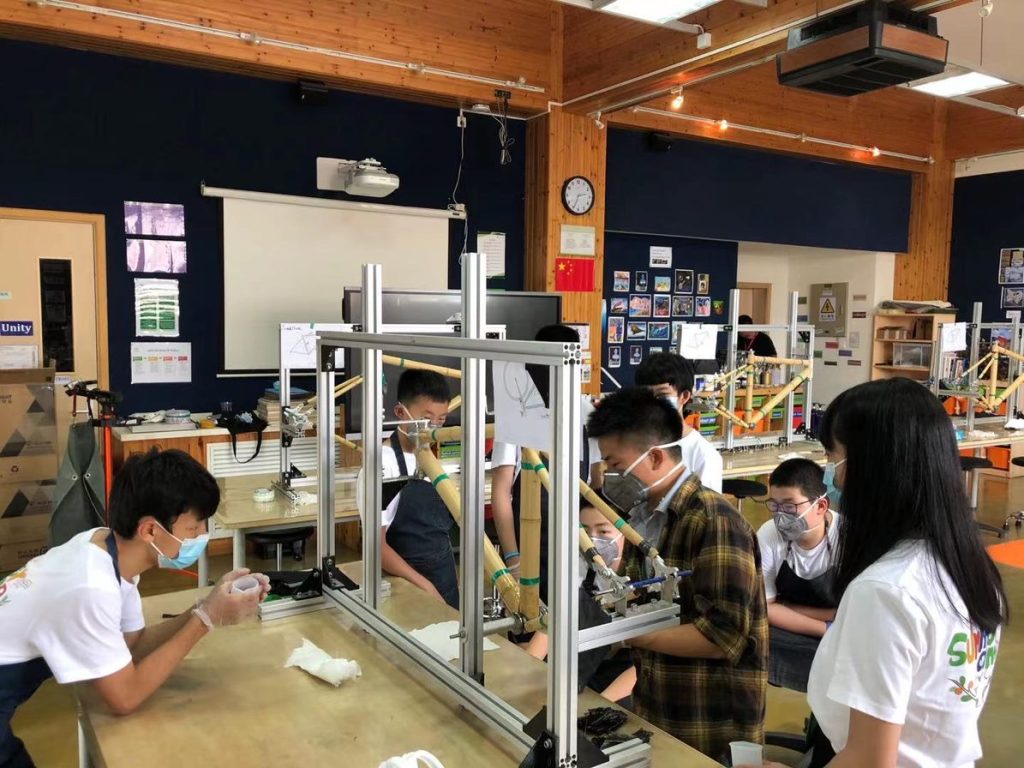
Bamboo bike is an extremely challenging project that I completed in grade 8. It is to design and build a bamboo bike from scratch. I have had 2 small bikes made of aluminum and steel because I was too small to buy frames made of carbon fiber. My father then brought me to a famous bike fitter who used to be a world class ironman triathlon athlete at Kona, Hawaii . He measured my body geometry and designed a frame for me. Then the bike factory used his designed blueprint to prepare a tailor-made frame for me. It was a great bike accompanied me for 4 years.
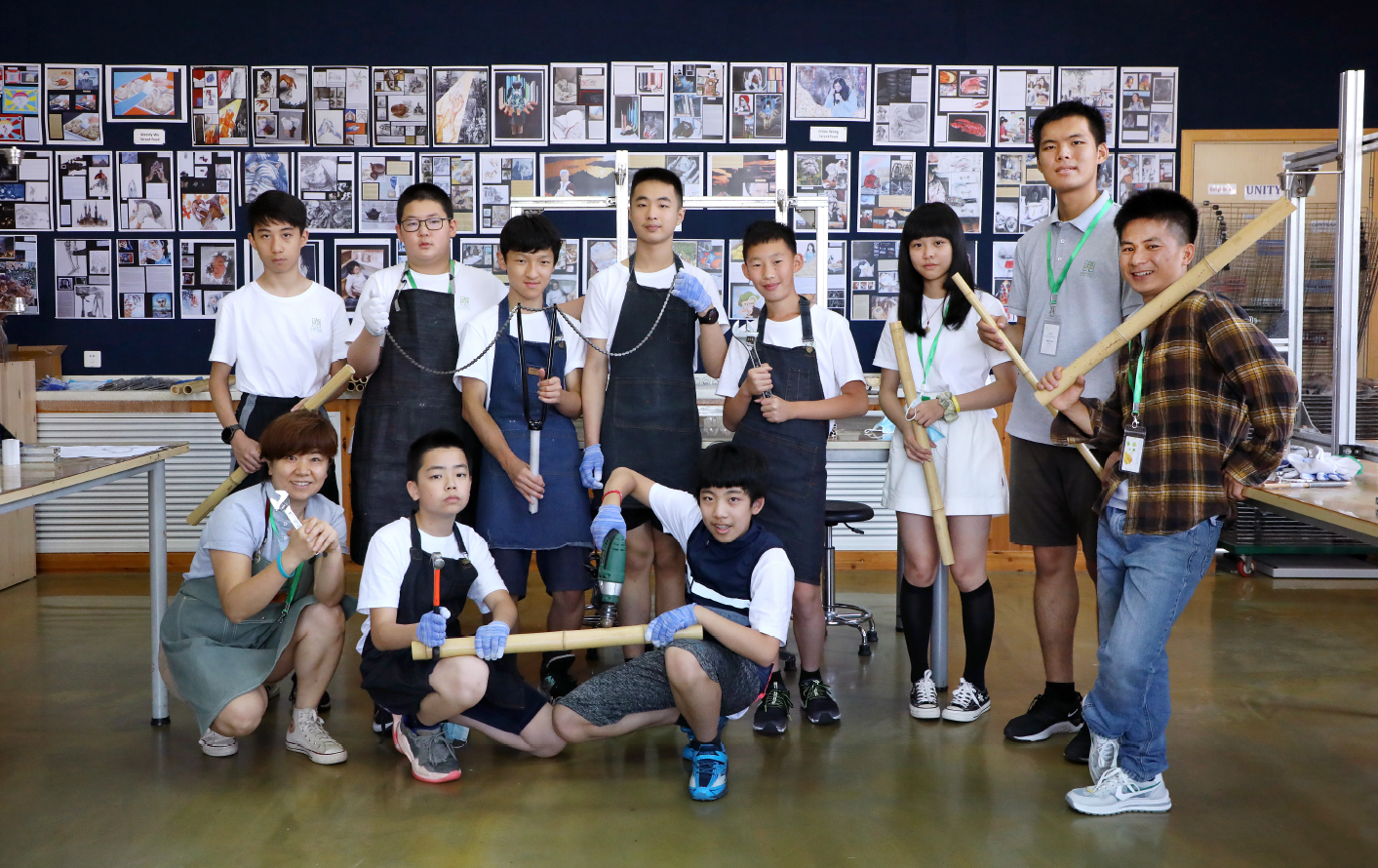
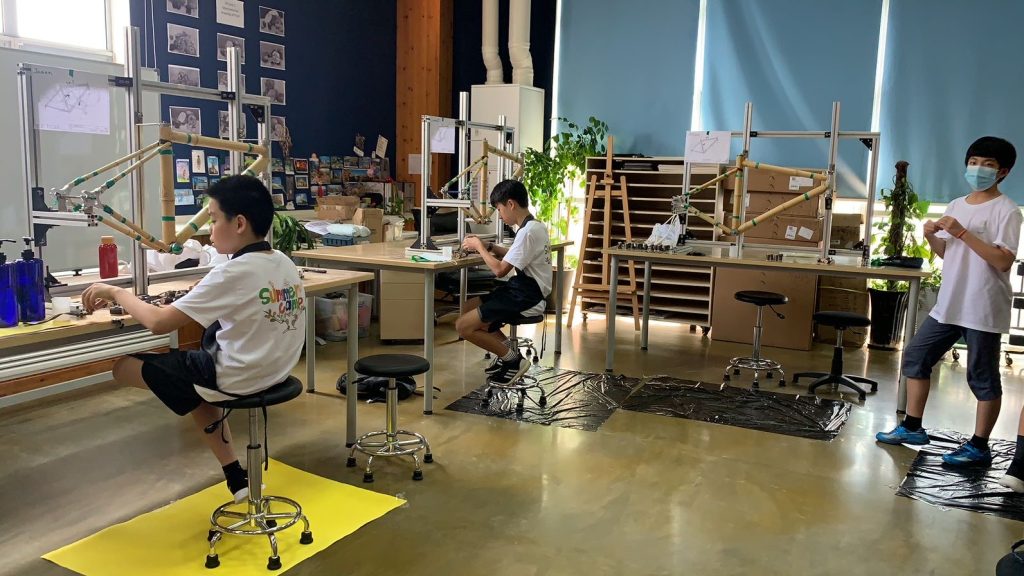
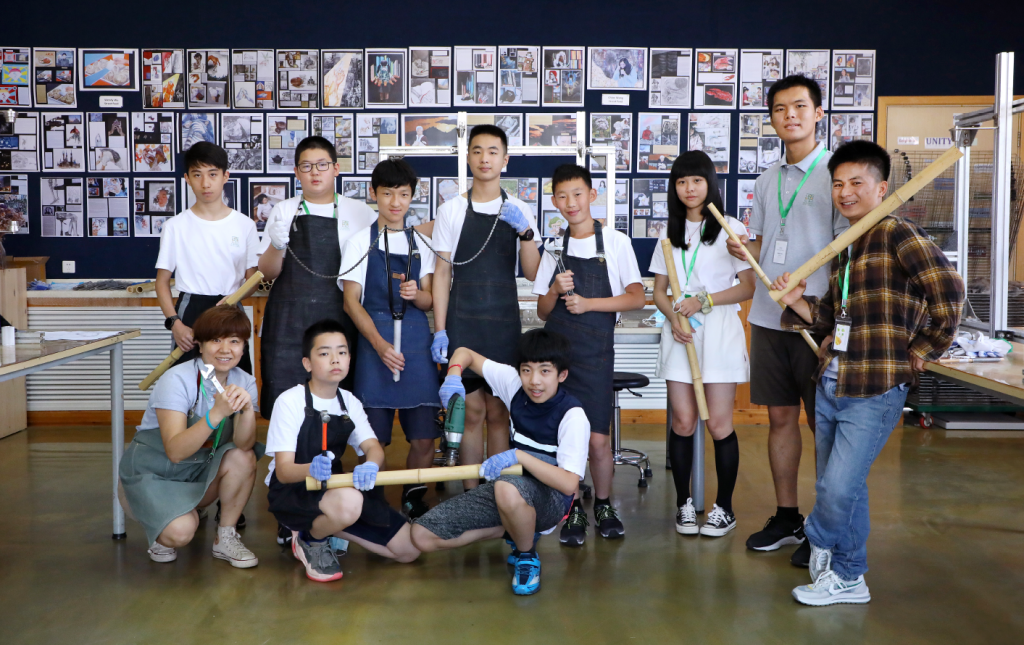
I was inspired by the idea of using bamboo as a natural and renewable material for bike frames when reading a story of the guy named Mowgli who built a bamboo bike and rode this bike to travel around the world. Different from steel or aluminum, bamboo is stronger, lighter, more flexible, with a unique art outlook. So, when he came to our school and setup a summer camp for building bamboo bike, I knew it was my time. However, working with bamboo had a lot of challenges, such as sizing, cutting, joining, and finishing. I didn’t estimate it would be so difficult to make a real bike which could be rode on the road without being broken into pieces.
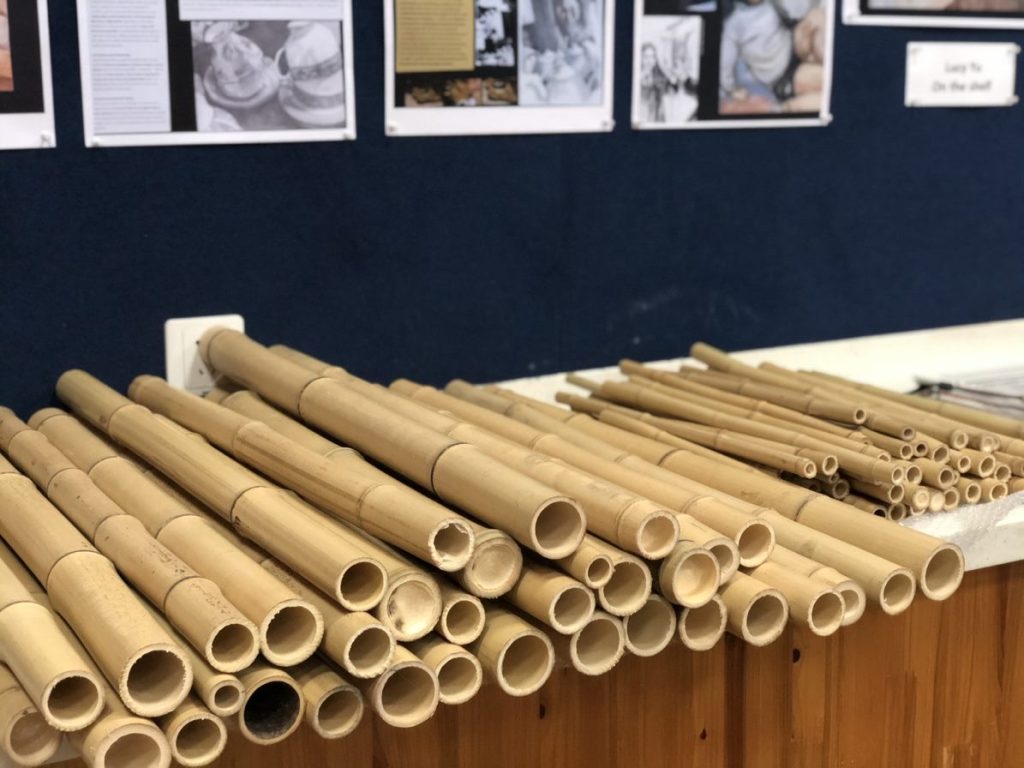
The first challenge was to find the right size of bamboo that was suitable for my fitting. In the year of grade 8, my legs were longer, but my body and arms were shorter. Such body geometry could not fit into any carbon fiber frame selling on the market. If the bamboo was too long or too thick, I will need to spend a long time on sizing it. Luckily, Mowgli brought a wide selection of bamboo poles that were already cured and treated to prevent insect infestation and mold growth. I chose a type of bamboo that had thick walls and straight sections, which would make it easier for me to cut and join.
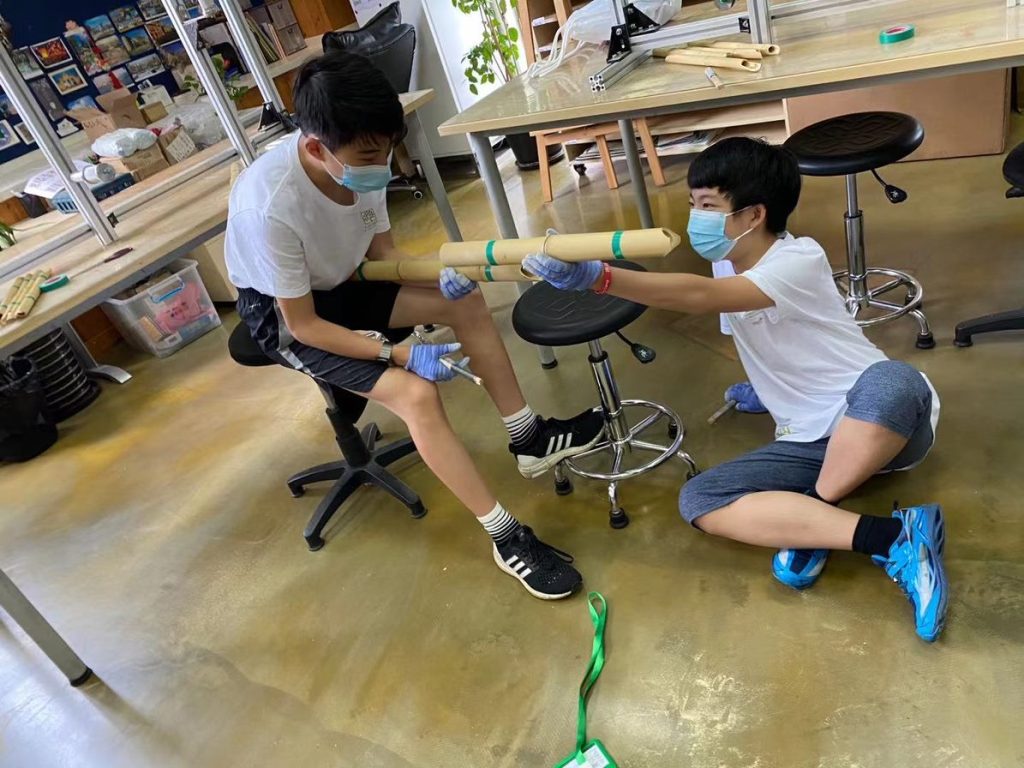
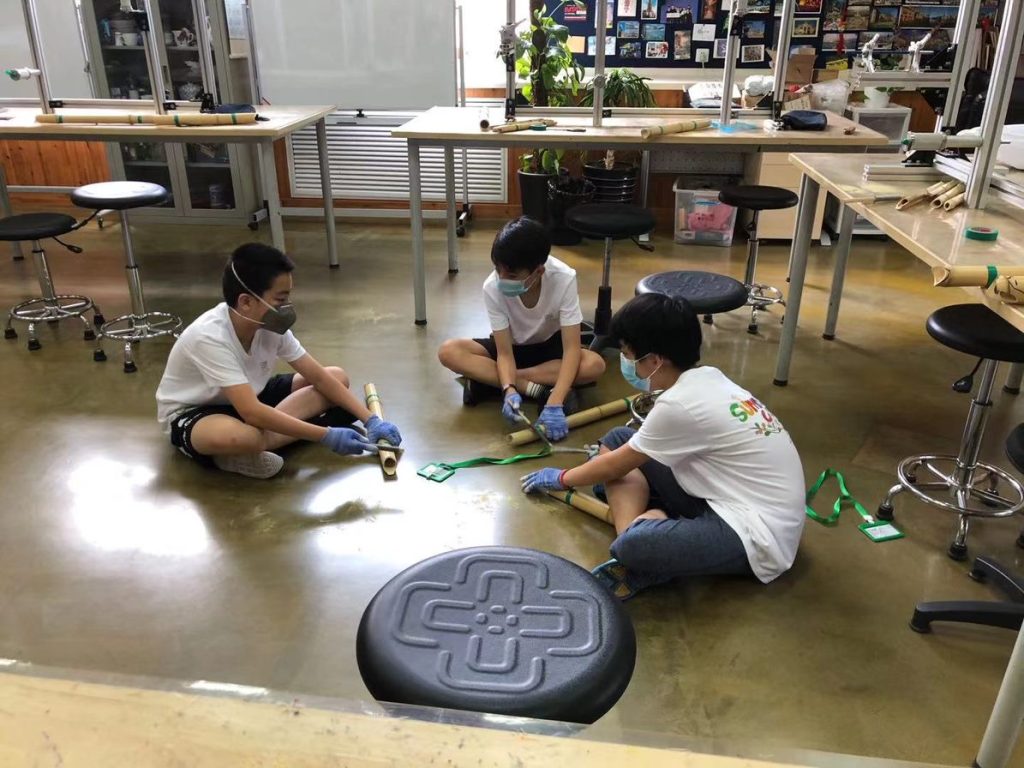
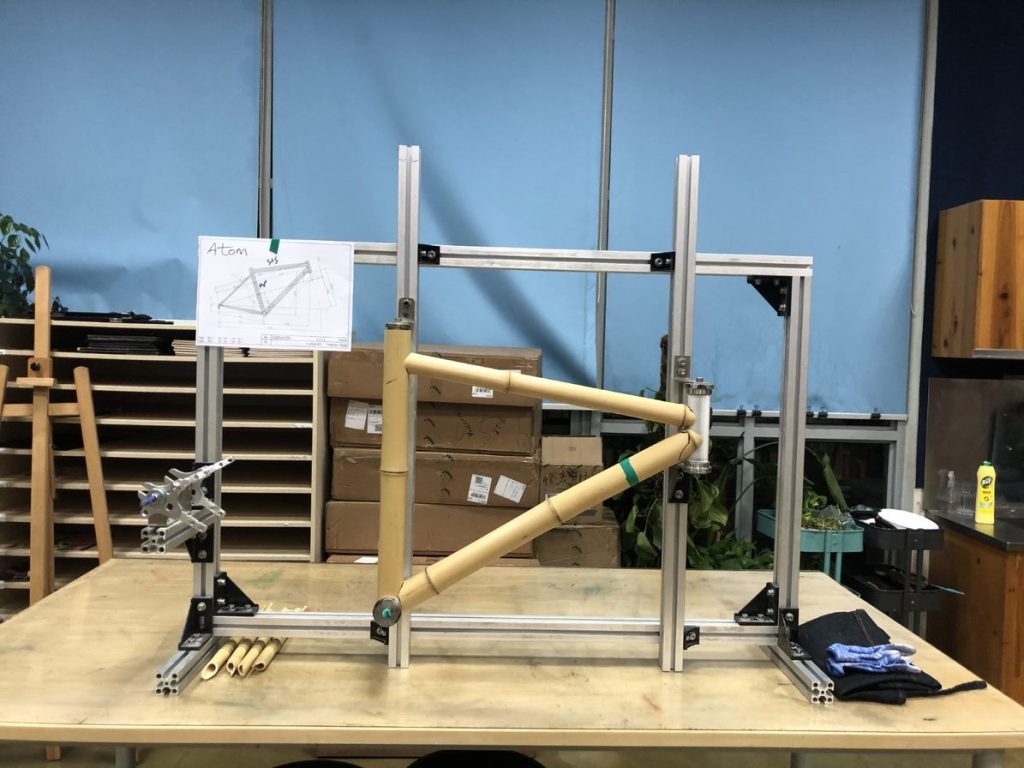
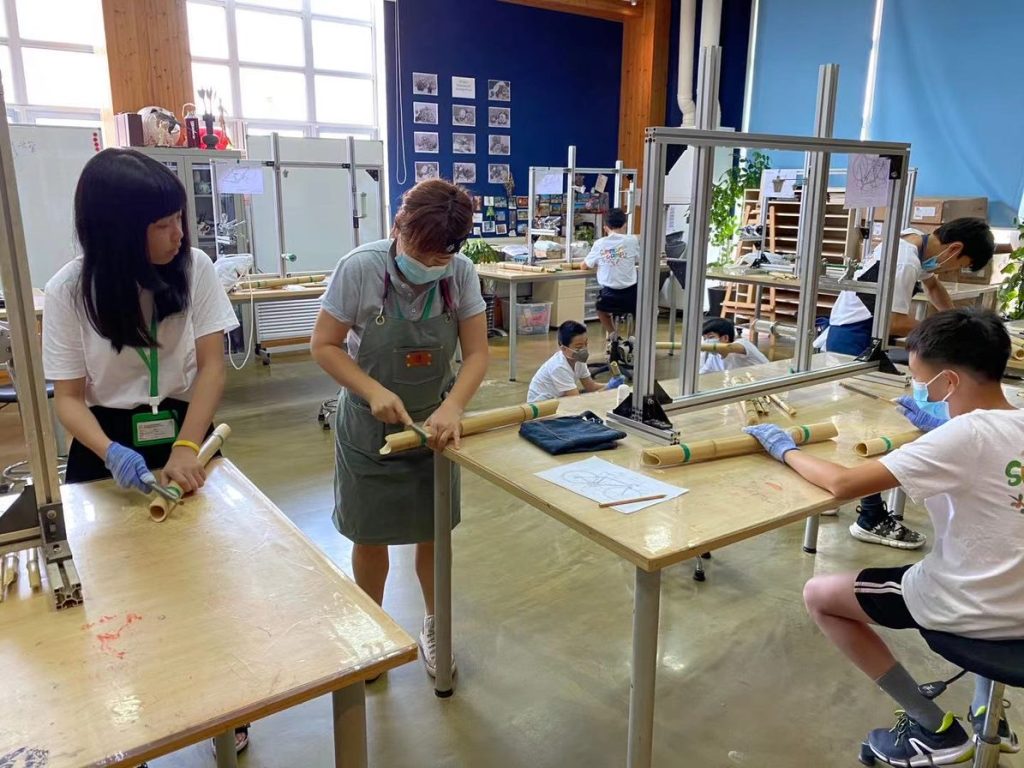
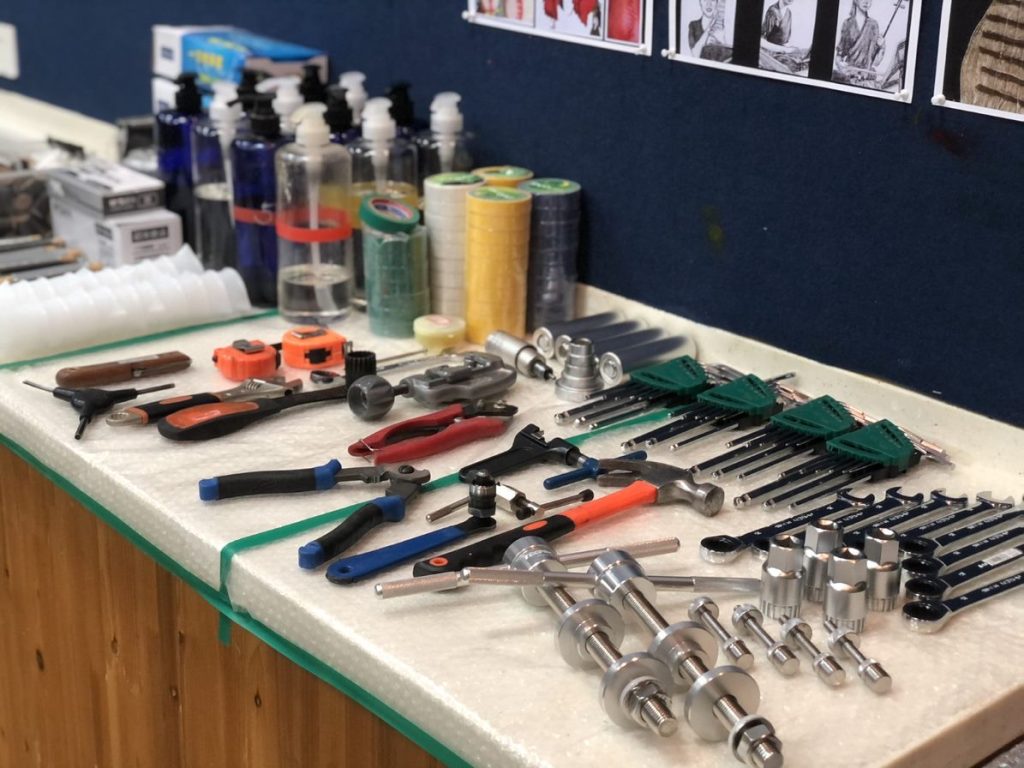
The next challenge was to cut the bamboo poles to the right lengths and angles for the bike frame. I used my bike geometry fitting report as a reference, and measured the dimensions of the head tube, top tube, down tube, seat tube, etc. The most important thing in bike frame fitting is the reach and stack. I tried to make the stack: reach ratio to near 1.6:1 which will make me comfortable while riding for a long distance. I marked the bamboo poles with a pencil and used a hacksaw to cut them carefully. I also used many sandpapers to smooth the edges and remove any splinters. It is a work in need of great patience. The sandpapers have different categories of mesh. It means the number of mesh holes within an inch of area, and the number of mesh holes this sandpaper can pass through would be the number of units of mesh. The larger the mesh size of the sandpaper, the smaller the grain size of the paper, and vice versa. I first used mesh of 50,60 units, then mesh of 100,200 units, during the last stage, I used the mesh of 2000, 3000 units. You may not believe that I spent 3 full days on just smoothing the edges to achieve a perfect joint. Some classmates gave up in this stage.
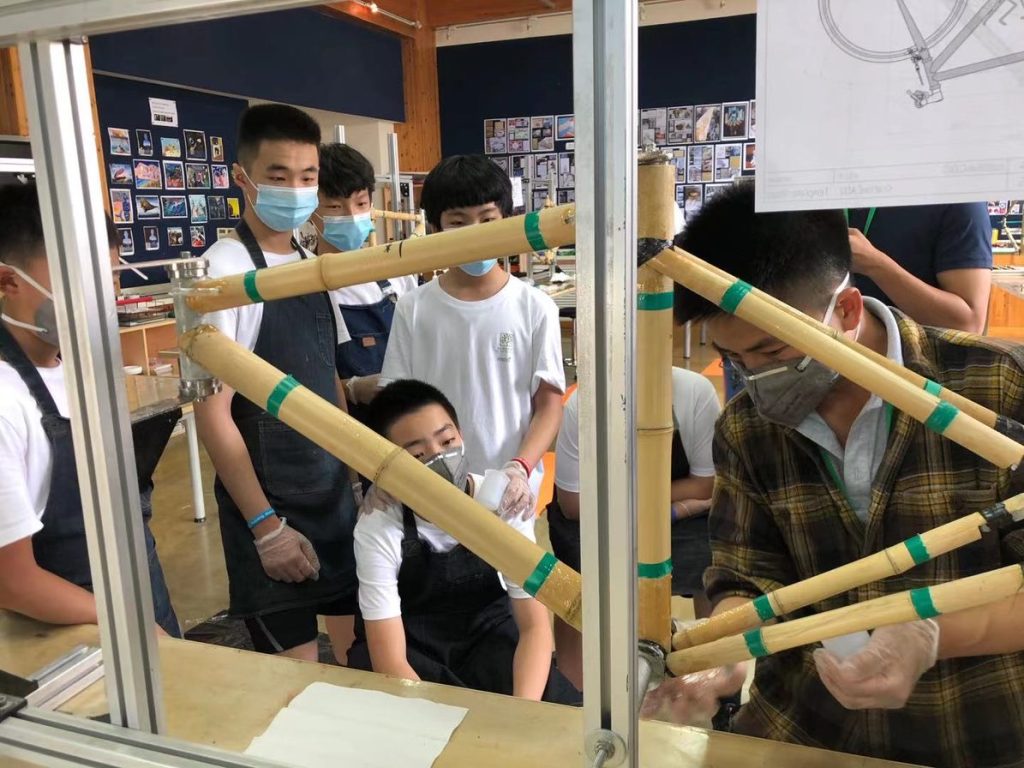
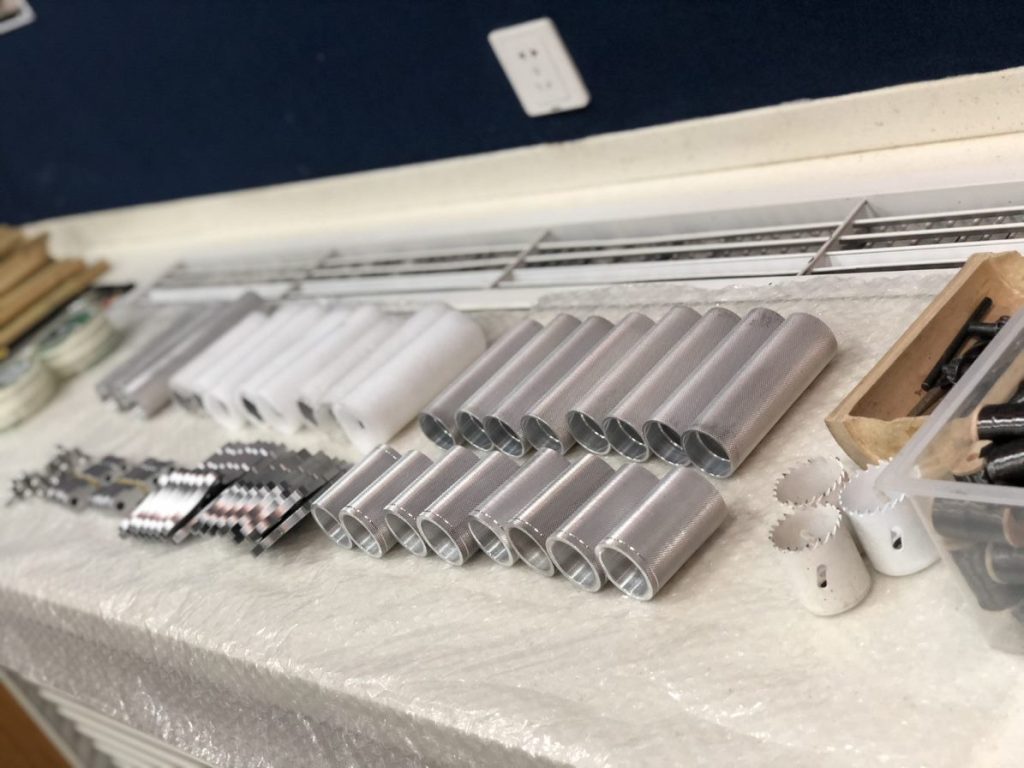
The 3rd challenge was the most dangerous part which was to make the joints between the bamboo pieces together. If it was not robust enough, the bike would break into pieces when you ride it on the road. Mowgli asked us to wear the N95 mask and gloves first, then introduced how to use carbon fiber and glue. The secret was there’re two types of glue being used. One was quick glue; it would work in 30 minutes. Another was slow glue; it would work in 2 hours. I wrapped the carbon fiber around the joints and applied quick glue to bond them together. After 30 minutes, I wrapped the 2nd layer of carbon fiber and applied slow glue, then wait for 24 hours. This method could create strong and durable joints which could withstand stress and vibration. During the entire process, I needed to be very careful to avoid the carbon fiber dust getting into my skin. It was said to be very itchy and needed to go to the hospital immediately, otherwise it would be permanent.
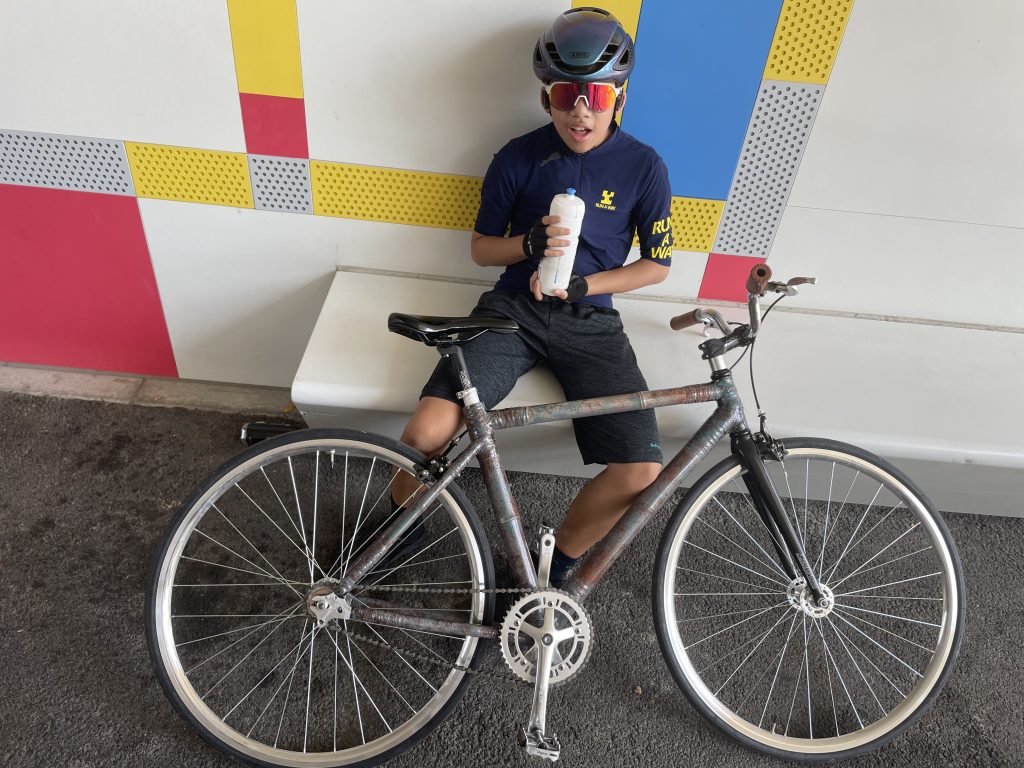
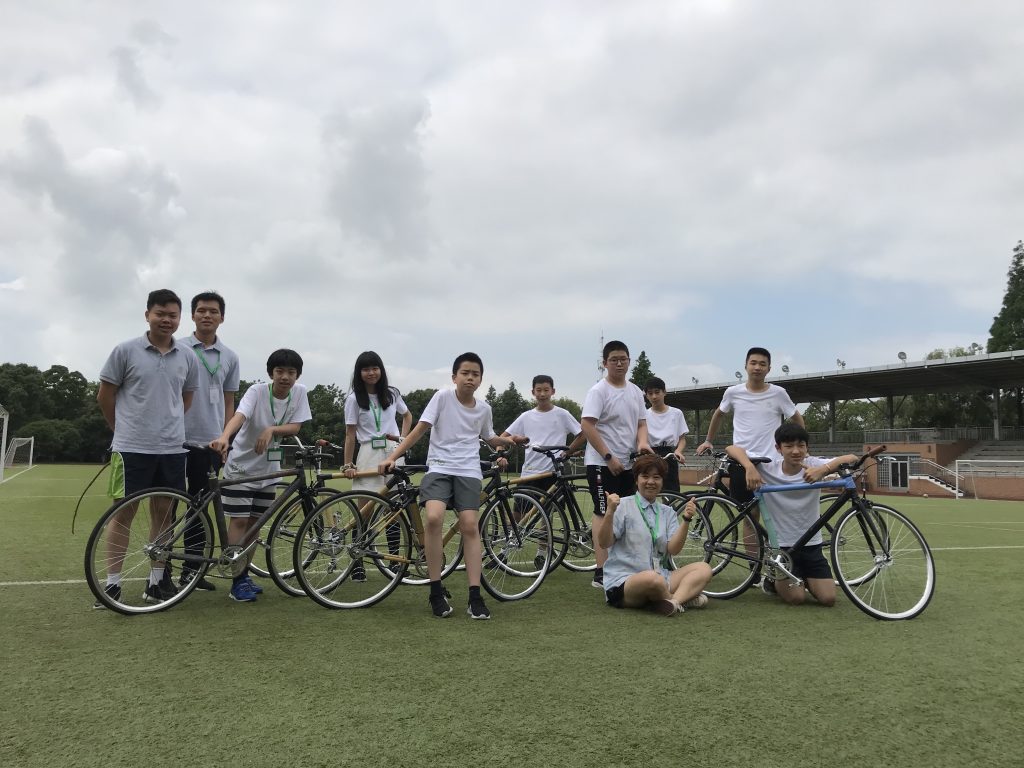
The final challenge was to finish the bike frame and assemble the components. I wanted to make a unique art outlook of the bamboo, so I decided to paint it. I first applied several layers of paints to protect it from moisture and UV rays. Then I added some special paints to personalize it. My frame design was inspired by the famous cartoon named “Cars”. I really liked Mater who was the best friends of lighting McQueen. I did it on purpose to make the frame look rusty and old. For the components, I used some 2nd handed parts that matched the style and performance of the bike. I installed a carbon fork, a standard handlebar, a leather saddle, a single-speed drivetrain, and rim brakes. I made test riding together on the soccer playground in the school and it worked perfect. I even competed with classmate for speed! The result was a cool and fully functional bamboo bike that I am very proud of. It took me about two weeks to complete this project, and it was not easy. I faced many difficulties during the process, such as finding the right materials, making precise cuts, aligning the joints, and adjusting the components. But I really learned a lot from this experience, such as how to work with different materials, how to do smoothing with different sandpapers, how to use carbon fiber and special glue, how to do painting, and how to assemble a bike.
I really enjoyed the creative process of designing and building something from scratch that reflects my personality and values.